Engine-derived ROI benchmarks for Park City-area short-term rentals, single-family rentals, and small commercial properties. Numbers come from running real fixtures through the Cost Seg Smart engine — same engine that produces your actual study. Studies from $495.
Operated by Cost Seg Smart. Studies are IRS-aligned, audit-defense-included. 5 fixture benchmarks computed May 2026.
Numbers above are engine-estimated outputs from running 5 representative fixtures — not promises about what your specific property will produce. Results vary based on actual property condition, year built, renovation history, county assessor data quality, and rental treatment (STR vs LTR). Full per-fixture table, neighborhood breakdown, and downloadable CSV/PDF on the Park City cost seg benchmarks page.
Park City is the cleanest cost-seg market in the Wasatch — and one of the cleanest in the country — for three reasons that don't apply to most ski towns. First, Utah conforms to federal §168(k), so the 100% bonus depreciation that OBBBA permanently restored in 2025 reduces both your federal and your Utah liability in the same year, with no addback. California buyers relocating equity to Park City are getting a real tax-rate uplift, not just a postponement of pain.
Second, the property mix is unusually heterogeneous for a ski market. Deer Valley's resort-tier basis is dominated by land — engine reconciliation factors run high and 5-year personal property shows up mostly through FF&E density. Old Town's 1890s–1920s mining-era homes, by contrast, often have heavy renovation costs layered onto modest original basis — renovation cost segregation does meaningful work here. Park Meadows family SFRs sit in the middle: lower land allocations, longer hold profiles, and a cleaner material-participation story because Park Meadows owners more frequently self-coordinate STR operations rather than relying on full-service management. (Note: personal use of the property carries §280A vacation-home limitations that can complicate STR-loophole treatment — material participation under §469 should be documented through hours of active management, not nights of personal stay.)
Third, the Nightly Rental Business License regime is unusually clear. Park City's municipal code (Title 4) separates short-term nightly rentals from long-term residential leases, and licenses are tied to the property address rather than the operator. That predictability removes a class of regulatory risk that markets like Joshua Tree, Nashville, and NYC keep generating. The downside: the city is actively enforcing license requirements, and your cost-seg study's hold-period assumptions should match the license term, not your business plan.
Verify with your CPA. State tax conformity rules for federal §168(k) bonus depreciation are adjusted frequently — multiple states have modified their treatment two or more times in the past decade. The general framing on this page reflects our understanding as of May 2026, but you should always verify current-year treatment with a qualified CPA or tax attorney before relying on specific dollar projections for your situation.
These aren't rough estimates. Each fixture was run through the same engine that produces your actual study — RSMeans 2024 base costs, BLS PPI time index, county assessor land allocation, IRS Pub. 946 / Rev. Proc. 87-56 MACRS classification, 100% bonus depreciation per OBBBA.
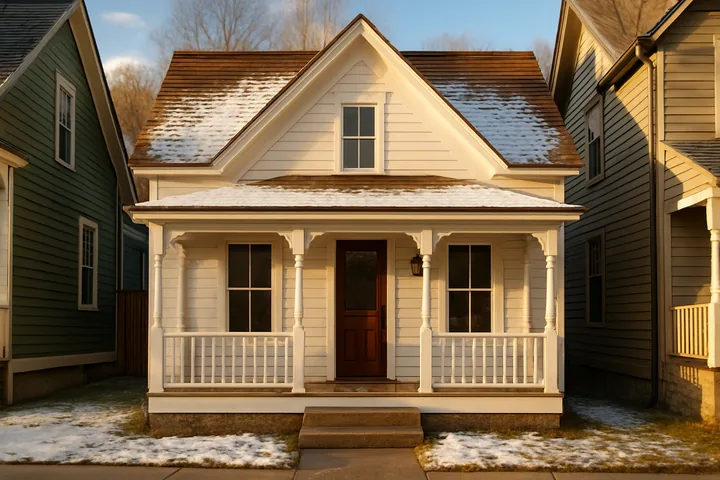
| Purchase price | $2,400,000 |
| Depreciable basis | $1,200,000 |
| Land allocation | 50.0% |
| 5-year reclassified | $231,564 |
| 15-year reclassified | $75,068 |
| Total reclass | 26.1% |
| Purchase price | $1,650,000 |
| Depreciable basis | $825,000 |
| Land allocation | 50.0% |
| 5-year reclassified | $136,586 |
| 15-year reclassified | $54,390 |
| Total reclass | 23.6% |
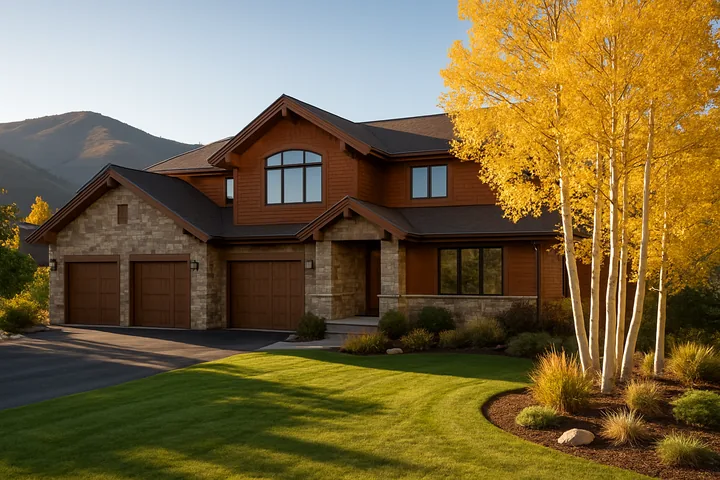
| Purchase price | $1,450,000 |
| Depreciable basis | $1,104,610 |
| Land allocation | 23.8% |
| 5-year reclassified | $221,235 |
| 15-year reclassified | $70,094 |
| Total reclass | 26.9% |
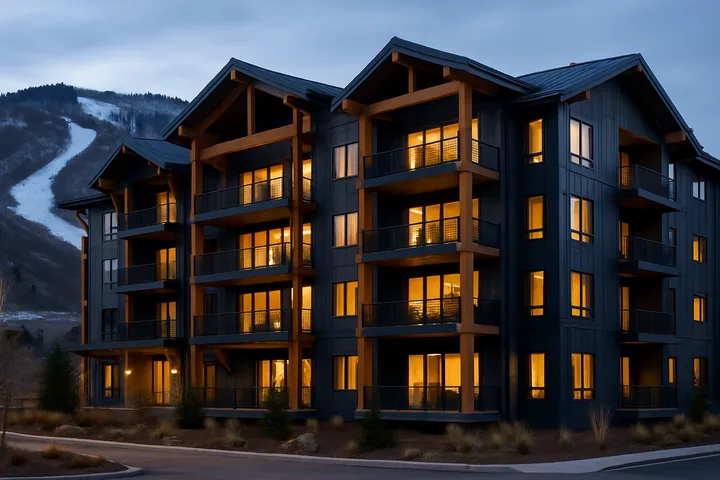
| Purchase price | $1,200,000 |
| Depreciable basis | $915,120 |
| Land allocation | 23.7% |
| 5-year reclassified | $184,265 |
| 15-year reclassified | $56,067 |
| Total reclass | 26.8% |
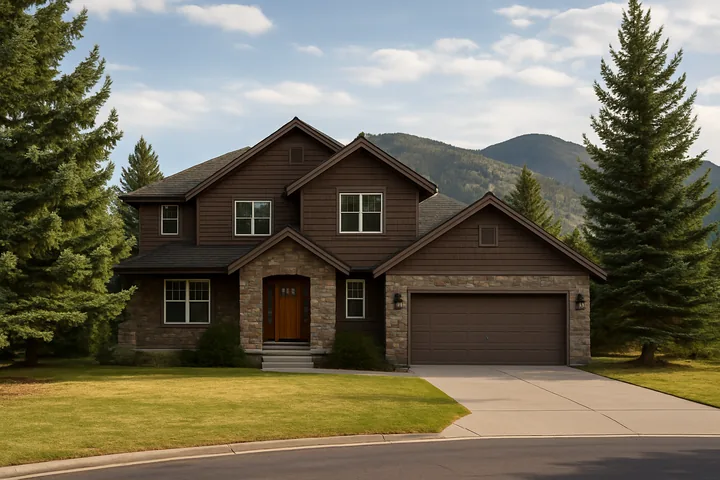
| Purchase price | $1,100,000 |
| Depreciable basis | $839,080 |
| Land allocation | 23.7% |
| 5-year reclassified | $91,101 |
| 15-year reclassified | $53,926 |
| Total reclass | 17.3% |
Cost-seg ROI varies more by neighborhood than by city. Park City's 5 sub-markets each have their own land-allocation pattern and property archetype:
| Neighborhood | Typical value | Typical land allocation | Profile note |
|---|---|---|---|
| Deer Valley | $2,800,000 | ~38% | Resort-tier ski-in/ski-out at Deer Valley Resort. High land allocation (resort land scarcity premium) suppresses the depreciable basis as a percentage of purchase — but absolute basis is still large. Best fixture profile: $2M–$5M condo or chalet. |
| Old Town (Park Avenue / Main Street) | $1,650,000 | ~32% | Historic mining-era SFRs and townhomes within the Park Avenue, Main Street, and Empire Pass corridors. Heavy renovations often layered onto 1890s–1920s bones — renovation_cost blocks meaningfully bump short-life reclassification. |
| Park Meadows | $1,450,000 | ~25% | Off-mountain family SFR market. Larger lots, 1990s–2010s builds dominate. Lower land allocation = more depreciable basis per dollar. Sweet spot for STR-converted family homes. |
| Canyons Village (Park City Mountain) | $1,200,000 | ~28% | Resort condo stock at the Canyons base. Vertical density reduces effective land allocation. Best fit for the $800K–$1.5M condo buyer. |
| Jeremy Ranch / Pinebrook | $1,100,000 | ~22% | Outside Park City limits — long-term rental crossover. Lower entry, weaker STR margins but easier permitting. Material participation cleaner because tenant turnover is annual rather than weekly. |
Methodology note: "Typical land allocation" reflects baseline patterns for the sub-market. For ultra-premium or resort-tier inventory where reconstruction cost exceeds 2.0× the implied depreciable basis after subtracting baseline land, the engine applies a premium land floor (~50%) to keep the study within audit-defensible territory. This means individual fixture engine output may exceed the neighborhood typical — especially for resort-tier ski-in/ski-out, beachfront, or view-premium product where land scarcity dominates value. See the /data/ page for per-fixture land-source attribution. Results vary substantially by specific property condition, renovation history, and assessor records.
Park City Nightly Rental Business License. Operating an STR in Park City requires a Nightly Rental Business License from the city's Business Services Office, with a separate Type 1 (residential) or Type 2 (resort/zoned commercial) designation depending on parcel zoning. License renewals are annual; the license is tied to the property, not the operator. Material participation under §469 requires >100 hours of active management AND more than any other person — Park City's professional property-management ecosystem means tracking this carefully matters more here than in markets where owners self-manage. Summit County assessor data is publicly searchable at SummitCountyUtah.gov; we cross-reference recorded sales basis and land allocations against engine outputs as a QC step.
For the full IRS-rule reference layer (§168(k), §469 material participation, state conformity), see irsdepreciationrules.com — our open reference site.
Indirectly. The license itself doesn't change the cost-seg study's component analysis or MACRS classification. But it affects two upstream assumptions: (1) hold-period economics, because licenses are tied to property addresses and renewed annually, so a buyer whose STR plan assumes 10+ years of nightly-rental income should verify the license history before relying on those projections; (2) material participation under §469, because Park City's professional property-management ecosystem means owners often delegate operations, and the 100-hour/more-than-anyone test gets harder. We assume conservative 5-year hold profiles in Park City advisory ranges unless an owner can document active management.
No. HOA dues are ongoing operating expenses, deductible against rental income in the year incurred. They never become part of your depreciable basis. What CAN go into basis: capital assessments levied by the HOA for shared infrastructure (e.g., a special assessment for a new HVAC plant, paving, or pool replacement). Those are capitalized as additions to your basis and depreciated over the same schedule as the original property — and a cost-seg study can sometimes reclassify portions of HOA-funded capital improvements into shorter recovery periods if you can substantiate your pro-rata share of identifiable 5/15-year components.
Higher than the regional average — but only if the renovations were capitalized rather than expensed at the time. Old Town homes often see effective reclassification ratios in the 26–34% range when the original 1890s–1920s structure has had a substantial post-2000 renovation. The mechanics: original-build structural components don't reclassify well (most are integral to the long-life building), but the renovation cost (new electrical, HVAC, finishes, FF&E, landscaping, decking) is where the 5- and 15-year work happens. The engine treats renovation_cost as a separate allocable pool with its own MACRS distribution — for a heavily renovated Old Town SFR, that pool often contributes 60–80% of the total accelerated component.
It can be, if you self-manage and document your hours. The IRS test for whether short-term rentals get out of the §469 passive-loss bucket is twofold: average customer use under 7 days (or under 30 days with personal services), AND you materially participate (one of 7 tests, but the practical ones are >500 hours OR >100 hours and more than any other person). For Park City owners who use a professional management company, the second test typically fails — the manager spends more time than you do. The path that works: self-manage cleaning coordination, guest communication, and maintenance directly via an app like Hospitable or Hostfully; track hours; bias toward stays under 7 days. Confirm with your CPA before assuming STR-loophole treatment.
Three different profiles. Deer Valley: highest absolute Y1 savings dollars but lowest savings-as-percent-of-purchase, because land allocation is 35–40% (resort-land scarcity premium). Canyons Village: middle on both axes — lower land allocation than Deer Valley (vertical condo density helps), middling FF&E density per square foot. Park Meadows: best percent-of-purchase ROI because land allocation is closer to 22–27%, and family-home FF&E density is high once you furnish for STR use (sleeps-12 layouts, multiple full baths, hot tub, smart-home additions). For a $1.5M purchase, the median engine output is around 27–32% reclassification in Park Meadows vs 18–22% in Deer Valley.
More general cost-seg questions answered at costsegsmart.com/faq/.
Cost Seg Smart studies are IRS-aligned, engineering-reviewed, and include written audit defense. Pricing is transparent and starts at $495 for residential properties under $300K — full pricing on the main site.